Why Momos Became India’s Most Loved Street Food (And What That Means for Kerala)
If you walk through any busy market in Delhi, Kolkata, Bengaluru, or Kochi today, you will see the same thing: a crowd gathered around a steamer, the smell of garlic and ginger in the air, and plates of momos disappearing faster than they can be made.
Momos are now the most widely consumed street food in India by volume. They have beaten samosas, pakoras, and even chaats in urban popularity surveys. And in 2025 and 2026, they are no longer just a North Indian street food. They are Kerala’s snack too.
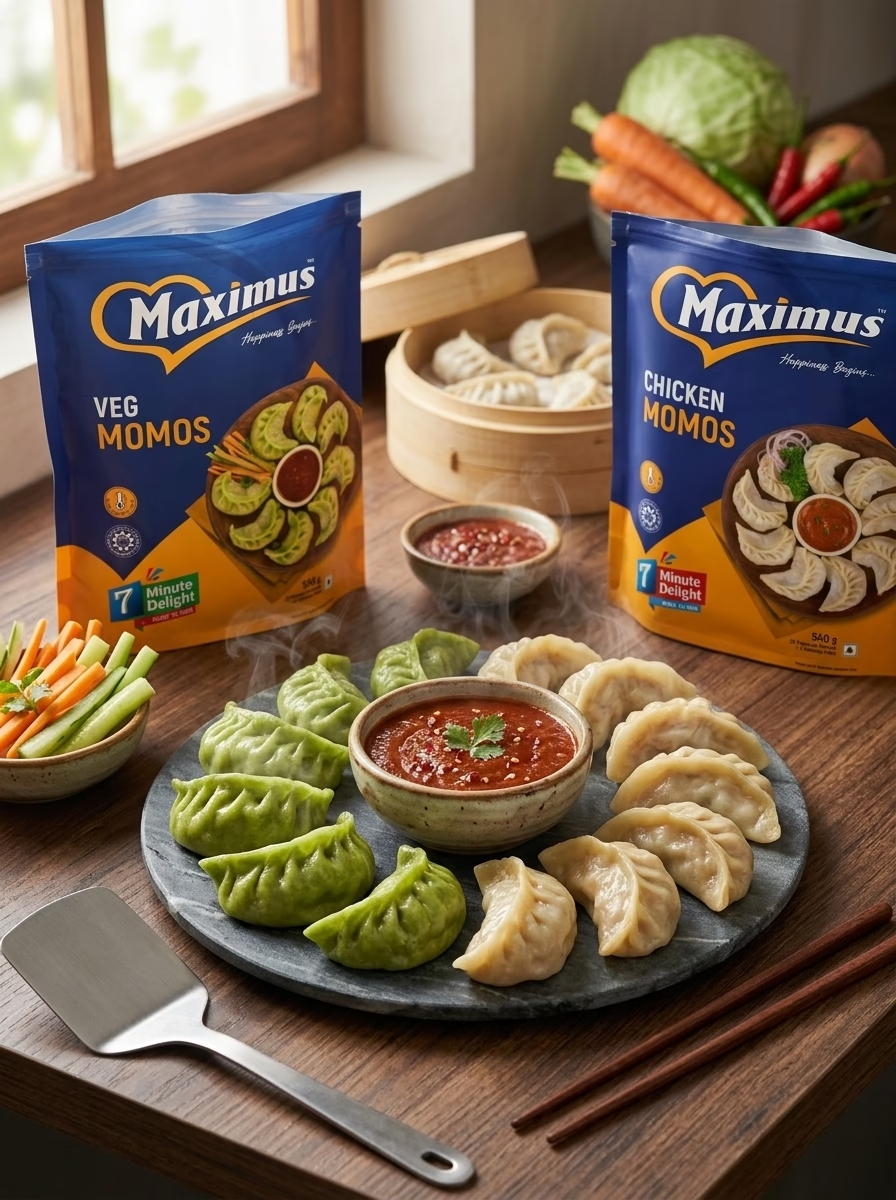
This is the story of how momos became India’s most loved street food — and what their rise means for Kerala families, food culture, and brands like Maximus Frozen Momos that are bringing this phenomenon home.
Table of Contents
- Where Did Momos Come From? The Origin Story
- How Momos Conquered India Street by Street
- What Makes Momos So Universally Loved
- The Rise of Frozen Momos: From Street to Supermarket
- Momos in Kerala: A Love Story in Progress
- Why Maximus Frozen Momos Are Leading Kerala’s Momo Moment
- Momo Culture Then vs Now: A Comparison
- FAQs — Momos History and Kerala
Where Did Momos Come From? The Origin Story
The momo is not originally Indian. It is Himalayan. The word itself is believed to derive from the Tibetan term ‘mog mog’ — a steamed dumpling that has been a staple of Tibetan, Nepali, and Himalayan communities for centuries.
Across the Himalayan belt — from Tibet and Bhutan to Sikkim, Darjeeling, and Nepal — communities have been making dumplings with thin wheat dough wrapped around meat or vegetable fillings for generations. The cooking method, steaming over boiling water, preserved the filling’s moisture and created the distinctive soft-yet-firm texture that defines a proper momo.
“Every single momo is a dumpling, but every single dumpling is not a momo.” — Kurush F Dalal, culinary anthropologist
Momos first reached the Indian plains through the migration of Nepali and Tibetan communities into Indian cities — primarily Kolkata, Delhi, and the North-East. Tibetan refugees who settled in areas like Majnu Ka Tila in Delhi and Darjeeling in West Bengal brought their food traditions with them. By the 1980s, momos had established a foothold in these communities. By the 1990s, they had become a street food.
How Momos Conquered India Street by Street
The transformation of momos from a Himalayan community food to India’s most loved street snack happened in three distinct phases.
Phase 1 — The Enclave Era (1970s–1990s)
Momos existed almost exclusively within Tibetan and Nepali communities in specific urban neighbourhoods. They were unknown to most Indian consumers. The cooking was authentic, the portion sizes large, and the chutney — a simple tomato-chilli-garlic sauce — was always homemade.
Phase 2 — The Street Cart Explosion (1995–2010)
The 1990s changed everything. As India urbanised rapidly and millions of young people moved to cities for work and education, a new category of cheap, filling, fast street food emerged. Momo vendors — particularly from North-East India and Nepal — set up carts in Delhi, Kolkata, Pune, Bengaluru, and Mumbai. The price point was unbeatable: 20 to 30 rupees for a full plate. The taste was unlike anything Indian street food had offered before.
By the mid-2000s, momos were not just popular — they were iconic. Momo vendors outside colleges and offices became social hubs. The combination of steamed momos and fiery red chutney became one of India’s defining street food pairings.
Phase 3 — The Branded QSR Era (2010–Present)
The third phase brought momos into the organised food service sector. Wow! Momo, founded in Kolkata in 2008 by two college graduates, grew from a single stall to a nationwide quick-service restaurant chain with hundreds of outlets. Their success proved that momos could scale into a branded business.
This QSR wave legitimised momos as mainstream Indian food and accelerated their spread into cities and towns that had never had a significant Himalayan community. By 2020, momos were available in every major Indian city. By 2025, they had reached Tier 2 and Tier 3 towns — and Kerala.
What Makes Momos So Universally Loved
Momos do not just sell on price. They sell on experience. Several qualities make them uniquely compelling across regions, age groups, and dietary preferences:
The Texture Contrast
A well-made momo offers something rare in street food: a satisfying contrast between the soft, slightly chewy wrapper and the juicy, flavourful filling. This is not a dry snack. Every bite delivers moisture, seasoning, and texture simultaneously — a combination that is deeply satisfying and hard to replicate.
The Chutney Partnership
Momos are almost never eaten alone. The partnership between the momo and its chutney — typically a spicy, garlicky, tomato-based red sauce — is one of the most successful flavour pairings in Indian food culture. The chutney adds heat and acidity that the mild, steamed momo actively needs. Together they are greater than the sum of their parts.
The Adaptability
Momos adapt. They accept virtually any filling — chicken, vegetable, paneer, cheese, seafood — without losing their identity. They can be steamed for a lighter experience or pan-fried for a crispier one. They work as a snack, a starter, or even a meal. This versatility has allowed momos to enter food cultures very different from their Himalayan origins, including South India.
The Speed and Accessibility
A plate of steamed momos is ready in 5 to 7 minutes. On a street cart, at home, or in a canteen — momos are one of the fastest hot foods available. This is not incidental. The speed of momos is a core part of their appeal in time-pressed urban India.
The Inclusivity
Momos come in chicken and vegetarian variants, making them accessible to the full spectrum of Indian dietary preferences. They are naturally free of pork (in most Indian preparations), making them acceptable to Muslim and many Hindu consumers. The vegetarian variant, popular in Kerala too, caters to vegetarian households without any compromise on the core experience.
The Rise of Frozen Momos: From Street to Supermarket
The shift from street momos to frozen momos is the most significant development in the momo category over the last five years. And it is a shift that is still accelerating.
Street momos have one fundamental problem: hygiene uncertainty. The quality of the filling, the freshness of the wrapper dough, the cleanliness of the steamer — all of these vary by vendor, by day, and by location. For a family feeding school-going children, this variability carries real risk.
Frozen momos from FSSAI-certified manufacturers solve this problem entirely. The filling proportions are fixed, declared on the pack, and verified by the licensing body. The manufacturing environment is controlled and audited. The shelf life is assured — 9 months at or below -18°C for a quality product like Maximus. The cooking method is standardised: steam from frozen for 5 to 7 minutes.
This transition from street cart to freezer shelf mirrors what happened with pizza in Europe in the 1980s — a restaurant and street food became a mainstream home product without losing its core identity. Indian frozen momos are following the same trajectory, and the pace is faster.
|
Category |
Street Momos |
Frozen Momos (Branded) |
|
Hygiene |
Variable — vendor dependent |
✓ FSSAI certified, controlled facility |
|
Ingredients |
Unknown — unlisted |
✓ Declared on pack with percentages |
|
Consistency |
Variable — changes daily |
✓ Same every time |
|
Preparation |
Ready-made at vendor |
✓ 5–7 min steam at home |
|
Shelf Life |
Must be eaten immediately |
✓ 9 months at -18°C |
|
Availability |
Near vendor location only |
✓ Supermarkets + online across Kerala |
|
Price |
₹30–80 per plate |
₹70–100 per serving (home-cooked) |
Momos in Kerala: A Love Story in Progress
Kerala was not momo country a decade ago. The state’s food culture is dominated by its own extraordinary repertoire — rice, coconut, seafood, idli, dosa, and an elaborate tradition of non-vegetarian cooking with beef, mutton, and chicken.
But Kerala changed. Three forces brought momos to Kerala:
Migration and Return Migration
Millions of Keralites live and work outside the state — in Delhi, Bengaluru, Mumbai, the Gulf, and beyond. They come back having developed tastes for foods outside the traditional Kerala repertoire. Momos were one of the foods they brought back with them. Return migrants asking for momos in their local towns created the initial demand that food entrepreneurs moved to meet.
Urban Food Courts and Cafeterias
The growth of malls, IT parks, and urban food courts in Kochi, Thiruvananthapuram, and Kozhikode brought momos into the everyday food environment of urban Kerala. Office cafeterias and food courts normalised momos as a daily snack option, not an occasional novelty.
The Frozen Food Revolution
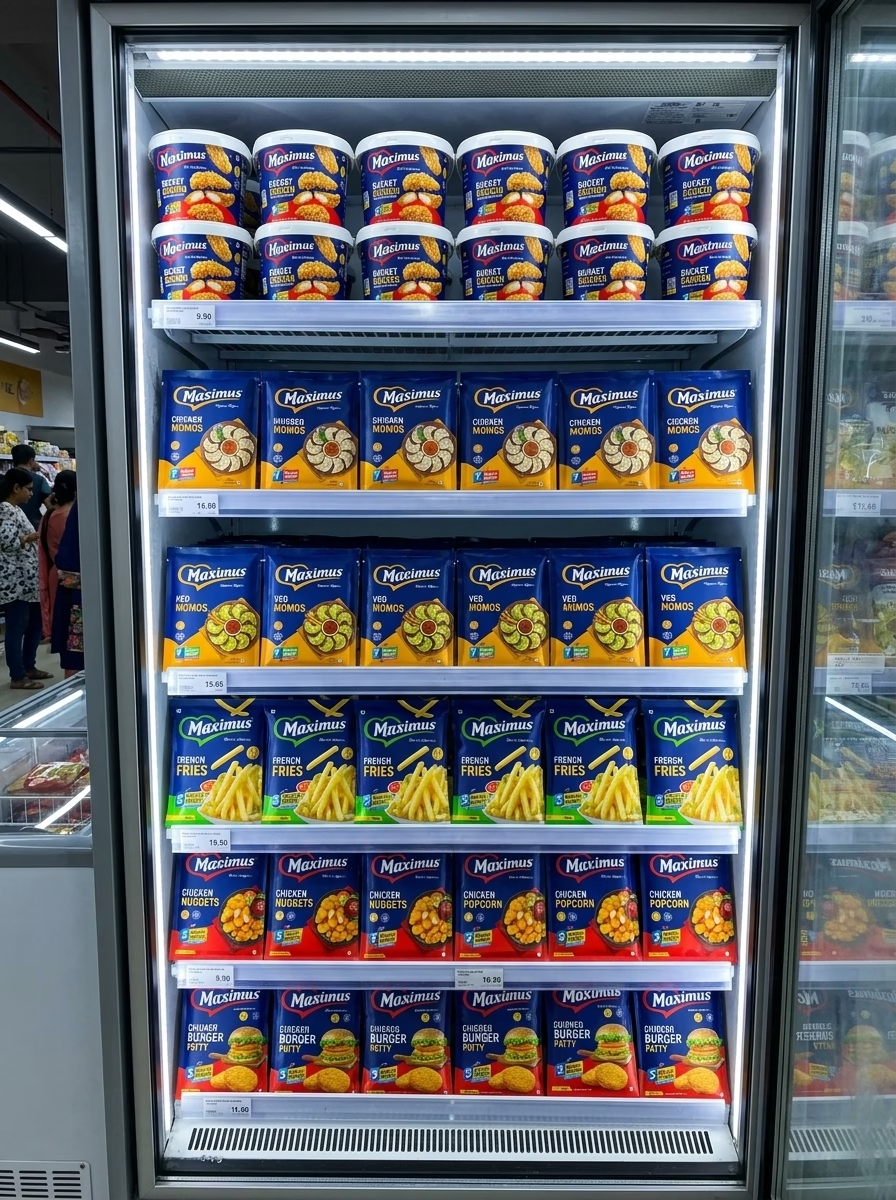
The availability of branded frozen momos — particularly Kerala-made options like Maximus — removed the geographic constraint entirely. You no longer need to live near a momo vendor to eat momos regularly. They are in the freezer section of the supermarket nearest to you, whether you are in Malappuram, Kochi, or Thiruvananthapuram.
Momos are no longer a North Indian food that Kerala tolerates. They are a Kerala food that Kerala has adopted — and is now producing locally.
Why Maximus Frozen Momos Are Leading Kerala’s Momo Moment
In a market where multiple frozen momo brands compete for shelf space, Maximus Frozen Momos stand out for a reason that matters deeply to Kerala consumers: they are made here.
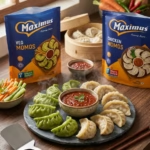
Manufactured by Silicon Valley Food Tech Pvt. Ltd. in Malappuram, Kerala, Maximus brings together the momo tradition with Kerala manufacturing standards and FSSAI compliance. The chicken variant uses 38.6% real chicken — a filling density that most national brands do not match. The veg variant leads with real cabbage and onion at declared percentages, with natural Chlorophyll colouring and no artificial dyes.
For Kerala families who care about where their food is made, Maximus answers that question directly: it is made in Kerala, by a Kerala company, to FSSAI standards, for Kerala consumers.
|
Why Kerala Families Choose Maximus |
The Proof |
|
Made in Kerala |
Manufactured in Malappuram by Silicon Valley Food Tech Pvt. Ltd. |
|
FSSAI Certified |
Lic. No. 11325010000294 |
|
Real Chicken Filling |
38.6% chicken — declared on pack |
|
Natural Colouring |
Chlorophyll only — no artificial dyes in veg variant |
|
Ready in 7 Minutes |
Steam from frozen, no thawing required |
|
9-Month Shelf Life |
Stored at or below -18°C |
|
Toll-Free Support |
1800-21-21-890 | customercare@maximusdelight.com |
Momo Culture Then vs Now: How Far They Have Come
|
Era |
Where You Found Momos |
Who Was Eating Them |
Kerala Access |
|
1970s–80s |
Himalayan community kitchens in Kolkata and Delhi |
Tibetan and Nepali communities only |
None |
|
1990s–2000s |
Street carts near colleges and offices in North India |
Urban students and young professionals in North India |
Very limited |
|
2010s |
QSR chains, food courts, malls across India |
Pan-India urban consumers |
Growing — mall food courts in Kochi |
|
2020–2025 |
Street carts + supermarket frozen section |
Mainstream India — all demographics |
Strong — frozen momos in supermarkets across Kerala |
|
2026 |
Home freezers, canteen fridges, cloud kitchens |
All families — including rural Kerala |
Full — Kerala-made Maximus available statewide |
Frequently Asked Questions — Momos History and Kerala
Where did momos originate?
Momos originated in the Himalayan region — primarily Tibet and Nepal — where steamed dumplings have been a staple food for centuries. The word ‘momo’ is believed to derive from the Tibetan term ‘mog mog’. They spread to India through Tibetan and Nepali communities settling in Kolkata, Delhi, and the North-East from the 1950s onward.
When did momos become popular in India?
Momos became widely popular across urban India in the mid-1990s to early 2000s, when street vendors from North-East India and Nepal began setting up momo carts in cities including Delhi, Kolkata, Pune, and Bengaluru. The combination of low price, quick preparation, and distinctive taste drove rapid adoption. The QSR era from 2010 onward — led by brands like Wow! Momo — accelerated national spread.
When did momos become popular in Kerala?
Momos became visible in Kerala primarily through urban food courts, IT park canteens, and mall restaurants from around 2012 to 2016. The real acceleration came with the availability of branded frozen momos in Kerala supermarkets, particularly from 2022 onward. By 2025, frozen momos — including Kerala-manufactured options like Maximus — became a mainstream supermarket product available statewide.
Why are momos so popular in India?
Momos are popular across India because they combine several universally appealing qualities: a satisfying texture contrast between wrapper and filling, a bold chutney pairing, adaptability to both chicken and vegetarian fillings, quick preparation, low-to-moderate price, and a fun, social eating experience. They adapted to Indian spice and flavour preferences while retaining their Himalayan identity — a combination that proved irresistible.
Are momos a healthy snack?
Steamed momos are among the healthier street and snack food options available in India. Compared to deep-fried snacks, steamed momos are lower in fat. The filling in quality products like Maximus Frozen Chicken Momos provides 9.88g of protein per 100g. The key variables are the quality of the filling (chicken percentage, real vegetables), the cooking method (steam is healthiest), and the portion size. Pan-frying adds fat from cooking oil.
What is the difference between momos and dumplings?
All momos are dumplings, but not all dumplings are momos. Momos are a specific South Asian subset of dumplings — made with a thin wheat dough wrapper, typically steamed, and characterised by a distinct pleating and filling style originating from Tibetan and Nepali culinary traditions. Chinese dumplings (jiaozi), Japanese gyoza, and Georgian khinkali are also dumplings, but they differ from momos in dough thickness, filling style, and cooking method.
Where can I buy Maximus Frozen Momos in Kerala?
Maximus Frozen Momos are available at supermarkets across Malappuram, Kochi, Ernakulam, Kozhikode, Thiruvananthapuram, and Thrissur. Online orders and store locator details are at maximusdelight.com. For bulk or institutional orders, call 1800-21-21-890 or email customercare@maximusdelight.com.
Conclusion: The Momo Story Is Kerala’s Story Now
The journey of momos — from a Himalayan community kitchen to the freezers of Kerala supermarkets — is one of the most remarkable stories in Indian food culture. It is a story of migration, adaptation, urbanisation, and the universal human attraction to food that is simple, satisfying, and honest.
For Kerala families in 2026, momos are no longer a curiosity. They are a staple. And as the momo category grows, the question is not whether to eat momos — it is which momos to trust.
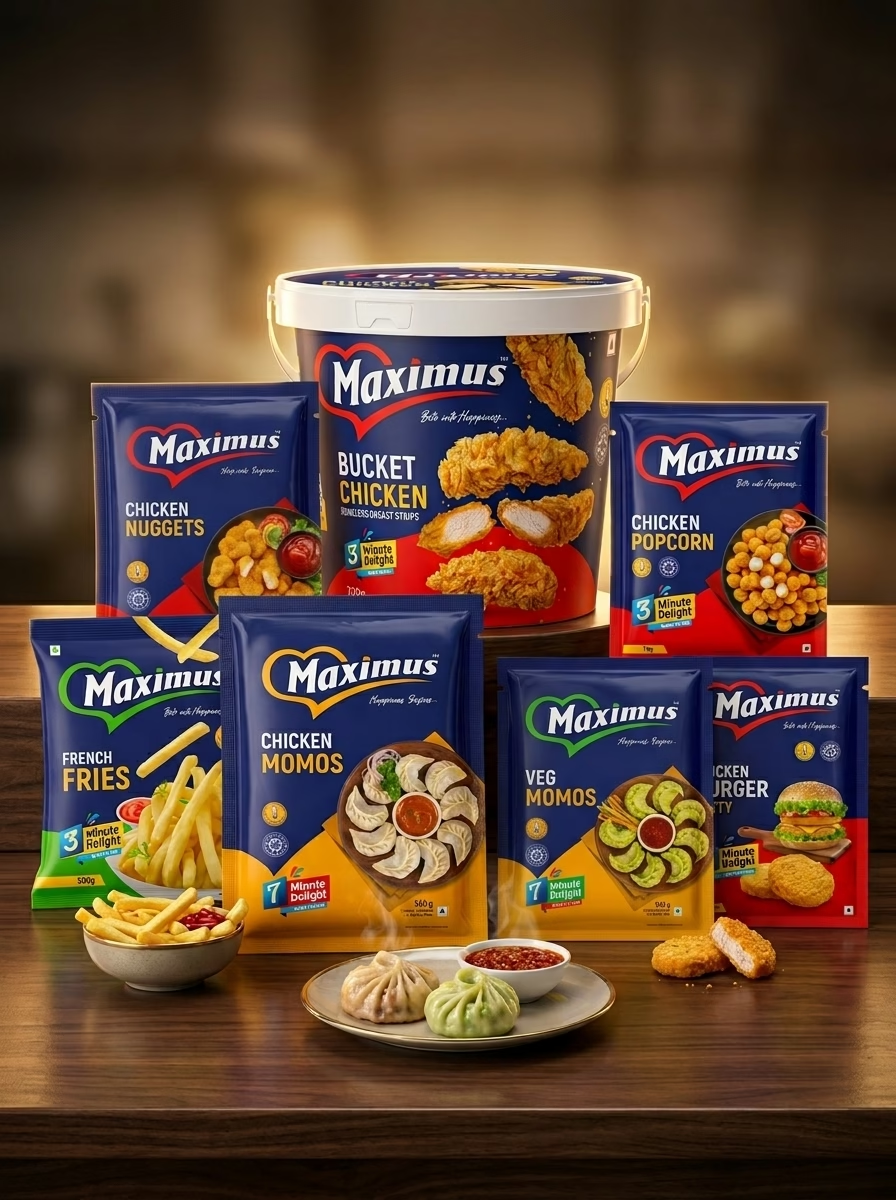
Maximus Frozen Momos — made in Malappuram, FSSAI certified, filled with real chicken at 38.6%, and ready in 7 minutes — are the answer for Kerala families who want the best of what the momo story has to offer, made right here at home
Explore both variants — Chicken Momos and Veg Momos — at maximusdelight.com, or call the toll-free helpline: 1800-21-21-890.