Best Frozen Food Brand in India: A Buyer’s Comparison Guide (2026)
Best Frozen Food Brand in India: A Buyer’s Comparison Guide
Walk down the frozen aisle of any supermarket in India today and you’ll find a dozen brands competing for the same freezer shelf space — Amul, ITC, McCain, Godrej Yummiez, and regional names like Maximus all fighting for a spot in your cart. With so many choices lined up side by side, “best” isn’t really a matter of packaging or price anymore. It comes down to a handful of things every household actually checks before committing to a brand: what’s inside the pack, how it tastes once it’s cooked, whether it’s genuinely good value, and how easy it is to find when you need it.
This guide compares the major players on exactly those points, so you can see where each brand genuinely stands out — and where a rising name like Maximus fits into that picture.
Why the Frozen Food Category Has Gotten So Competitive
A decade ago, “frozen food” in India largely meant peas and ice cream. Today it’s an entire aisle of ready-to-cook chicken, snacks, parathas, and meal components, driven by smaller households, busier work schedules, and a generation that grew up comfortable trusting a freezer the way their parents trusted a kitchen shelf. As demand grew, so did the number of brands chasing it — which is good news for consumers, but it also means the label “best” gets thrown around loosely in marketing. The only way to cut through that is to compare brands on the same objective criteria.
What Actually Makes a Frozen Food Brand “the Best”?
Before comparing brands, it helps to agree on what “best” should actually mean. For most Indian households, it comes down to five things:
- Ingredient quality — real chicken and vegetables versus fillers and mechanically separated meat
- No trans fat and minimal preservatives — a growing concern as families read labels more closely than they used to
- Taste and texture — does it actually taste home-cooked, or does it come across as obviously “packet food”?
- Price per serving — value matters as much as the sticker price on the box
- Availability — can you actually find it near you, or only in select metro supermarkets?
Keep these five in mind as you read through the comparisons below — a brand that wins on one and loses on another isn’t automatically “the best,” it’s simply the best fit for a particular priority.
Comparing the Major Frozen Food Brands in India
Amul
Amul entered the frozen segment in 2017, building on decades of dairy trust. It’s strong on vegetarian snacks — French fries, cheese balls, parathas — and its nationwide cold-chain distribution means you’ll find it in almost any city. It’s less developed on the non-vegetarian side, where competitors have a bigger head start.
ITC
ITC runs a broad non-vegetarian and vegetarian frozen portfolio, from chicken galouti kebabs to hara bhara kebabs and cheesy corn triangles. The brand leans on “no artificial colours” messaging and multi-format cooking instructions — air fry, bake, or deep fry — which appeals to households cooking with different appliances. Distribution through modern trade and e-commerce is strong.
McCain Foods
A Canadian brand that has localised well for Indian tastes, adding mini samosas, aloo tikki, and masala fries alongside its classic potato range. McCain is generally known for consistent texture from batch to batch, along with no-cholesterol and low-trans-fat claims that resonate with health-conscious buyers.
Godrej Yummiez
Yummiez focuses heavily on kid-friendly shapes and portion sizes, positioning itself squarely as a family snacking brand. Retail reach is wide, and the brand has built strong recall among parents specifically shopping for children’s snacks.
Maximus
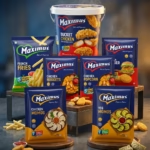
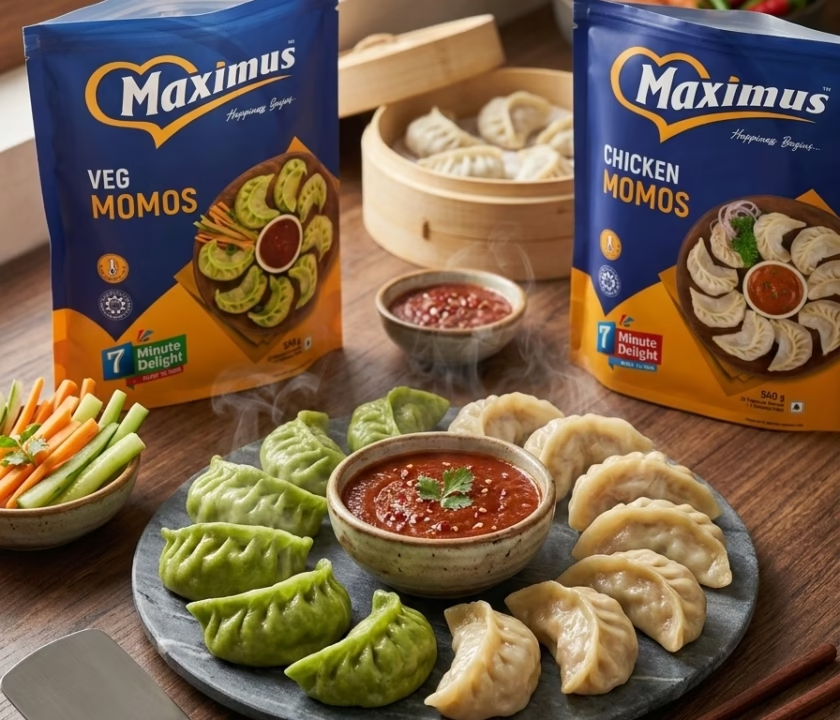
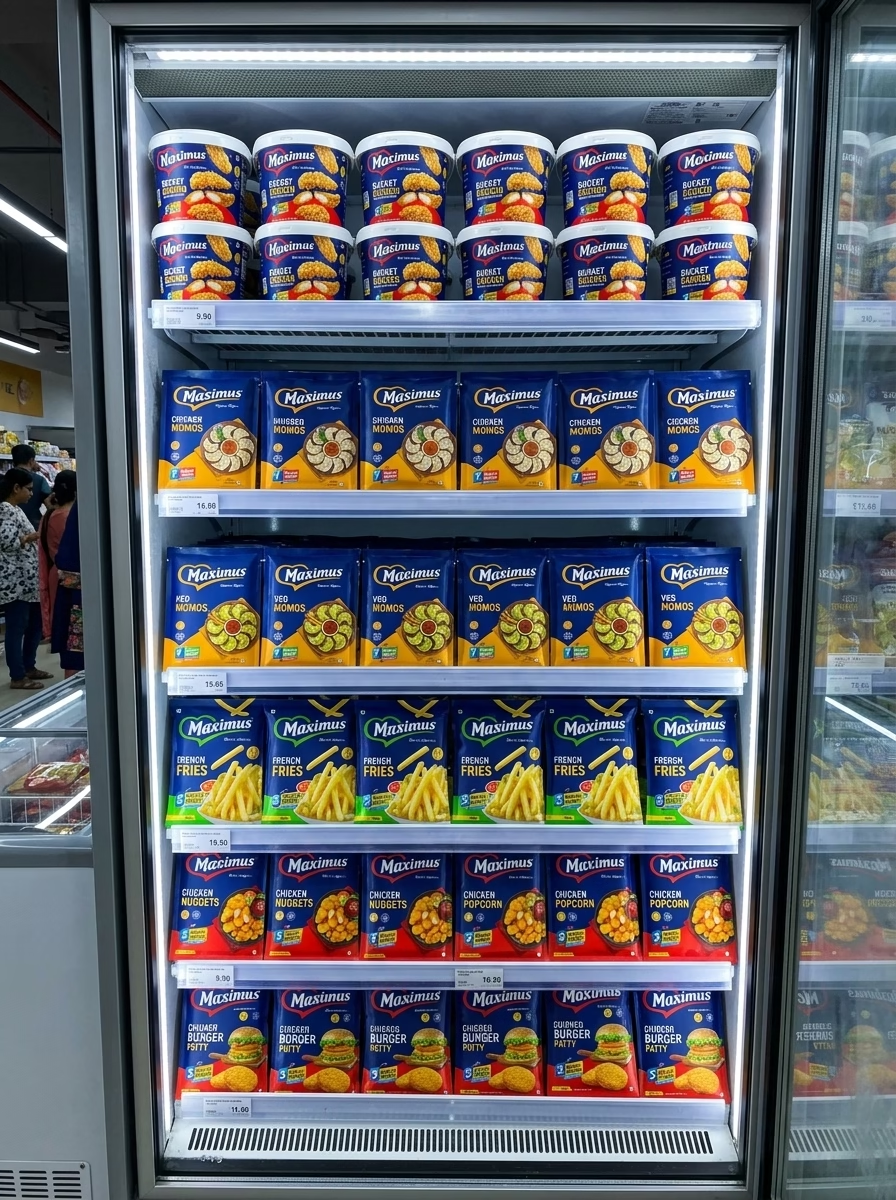
Maximus is a Kerala-rooted brand built around ready-to-cook chicken and snacking formats — nuggets, bucket chicken, momos, spring rolls, and more — made in smaller batches with a clear focus on regional taste preferences. Where the national brands tend to optimise for shelf-stability and mass appeal across every state, Maximus leans into fresher batch cycles and recipes tuned specifically for South Indian palates, which shows up in spice level, texture, and overall flavour depth. Distribution is expanding fast beyond Kerala into wider Indian markets, making it increasingly easy to find outside its home state.
Quick Comparison at a Glance
| Brand | Strength | Best For |
|---|---|---|
| Amul | Trust, strong vegetarian range | Everyday vegetarian snacking |
| ITC | Variety, no artificial colours | Families wanting variety |
| McCain | Texture consistency, potato products | Fries, samosas, aloo tikki |
| Godrej Yummiez | Kid-friendly shapes | Households with young children |
| Maximus | Regional taste, batch freshness | Families who prefer bold, home-style flavour |
How to Read a Frozen Food Label Like a Pro
Whichever brand you land on, the label is where the real comparison happens — not the front-of-pack claims. A few quick habits make a real difference:
- Check what comes right after the main ingredient (chicken, potato, vegetable) — a short, recognisable list is a good sign
- Look at sodium per serving, especially if the product will be a regular part of your weekly meals
- Compare the manufacturing date, not just the expiry date, to judge how fresh the batch actually is
- Check the serving size used on the nutrition panel — some brands use small serving sizes to make the numbers look better than they are in practice
Where Maximus Wins
If your priority is a brand that tastes closer to home-style Indian cooking rather than a globally standardised flavour profile, Maximus’s smaller-batch approach and regional recipe development are worth trying. The brand has also built out one of the more distinctive bucket-format chicken ranges for gatherings and parties — a format the larger national brands haven’t focused on as heavily — which makes it a genuinely different option rather than just another entrant in an already crowded aisle.
Making the Right Choice for Your Household
There’s no single “best” brand that wins on every criterion for every household. A family cooking mostly vegetarian meals may lean toward Amul. A household juggling different appliances might prefer ITC’s multi-format instructions. But if your household values bold, regionally accurate flavour and freshness over mass-market consistency, Maximus is one of the strongest options currently expanding across Indian markets.
Understanding India’s Frozen Food Market at a Glance
India’s frozen food market has grown from a niche, largely urban category into one of the fastest-expanding segments of packaged food, driven by rising disposable incomes, smaller nuclear households, and better cold-chain logistics reaching well beyond metro cities. Analysts tracking the sector consistently point to double-digit annual growth, with non-vegetarian ready-to-cook products among the fastest-growing sub-categories. This growth is exactly why the “best” conversation matters so much right now — as more brands enter the category, the gap between genuinely strong products and those simply riding the trend is widening, and consumers benefit from knowing how to tell them apart.
Price Isn’t the Same as Value
It’s tempting to equate the cheapest pack on the shelf with the best deal, but that comparison rarely holds up once you look closer. A lower-priced pack with a higher percentage of filler, water retention, or breading delivers less actual protein per rupee than a slightly pricier pack made mostly of real meat or vegetables. The better comparison is cost per gram of actual usable ingredient, not cost per pack. This is particularly true in the chicken-based frozen category, where breading-to-meat ratio can vary significantly between brands even at similar price points.
Regional Taste Preferences Matter More Than Brands Admit
One thing that’s often underplayed in frozen food marketing is how much regional palate differences affect whether a product actually gets finished at the dinner table rather than left half-eaten. A spice blend calibrated for a North Indian household may taste noticeably different — often blander or oddly seasoned — to a family in Kerala or Tamil Nadu, and vice versa. National brands generally aim for a flavour profile that works reasonably well everywhere, which by definition means it’s rarely the single best fit for any one region. This is where regionally rooted brands like Maximus have a structural advantage: a smaller, more focused market lets them calibrate spice level and seasoning far more precisely than a brand trying to satisfy the entire country with one recipe.
Frequently Asked Questions
Is frozen food as healthy as fresh food?
Frozen food preserves nutrients well when frozen quickly after preparation. The bigger factor is what’s actually in the recipe — look for real ingredients and minimal preservatives rather than judging quality by “frozen” versus “fresh” alone.
Which frozen food brand has the least preservatives?
This varies by product line even within a single brand — always check the ingredient label on the specific pack you’re buying, not just the brand’s general marketing claim.
Is Maximus available outside Kerala?
Maximus started in Kerala and is actively expanding distribution across India — check the Products and Contact pages on maximusdelight.com for current availability in your city.
How do I compare price per serving instead of price per pack?
Divide the total pack price by the number of servings listed on the nutrition panel, not by the number of pieces — pack sizes and serving definitions vary between brands, so this is the only fair way to compare.